
LOCAL LAW 11
NYC Local Law 11 (FISP) Guide for Property Managers & Building Owners
NYC “Local Law 11” is commonly used to refer to the City’s Façade Inspection & Safety Program (FISP). If your building is more than six stories, you must have the building’s exterior walls and appurtenances inspected on a regular cycle and file a technical report with the NYC Department of Buildings (DOB).
This page explains who’s covered, what’s required, deadlines, classifications (Safe / SWARMP / Unsafe), and how to plan so you stay compliant, reduce risk, and avoid penalties.
⸻
Who must comply
FISP generally applies to buildings higher than six (6) stories. Owners must arrange for inspections and ensure a technical façade report is electronically filed with DOB via DOB NOW: Safety.
Important: City lists and maps can help, but it’s ultimately the building owner’s responsibility to confirm whether the property is subject to FISP and which cycle/sub-cycle applies.
⸻
What gets inspected
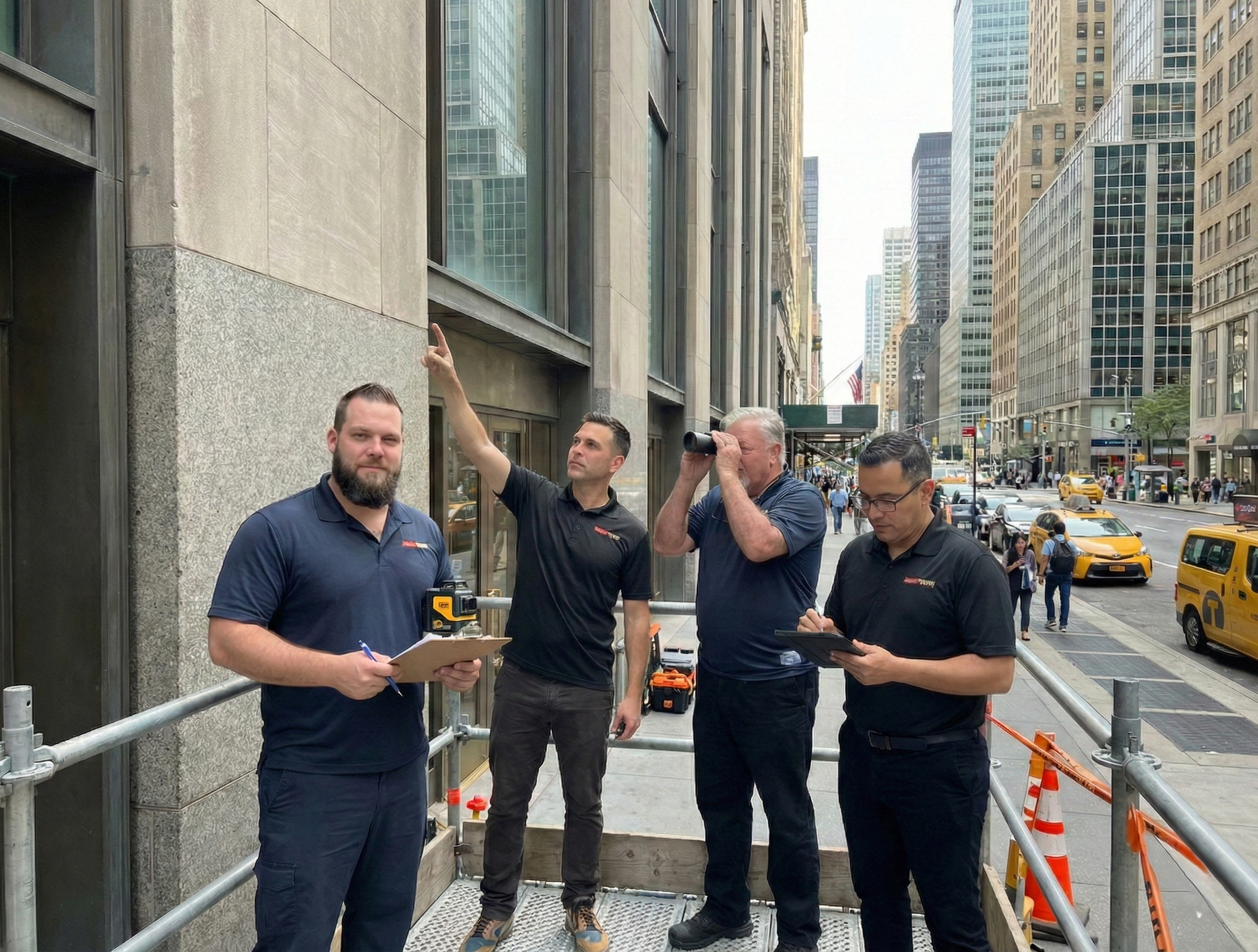
A DOB-approved Qualified Exterior Wall Inspector (QEWI) (a NYS-licensed Professional Engineer or Registered Architect who meets DOB requirements) performs the required “critical examination” and files the report.
Inspections cover the exterior walls and appurtenances (elements attached to the façade that can pose hazards if deteriorated).
⸻
FISP Cycle 10 deadlines (2025–2030)
DOB divides each 5-year cycle into sub-cycles based on the last digit of the building’s block number.
Cycle 10 filing windows
• Sub-Cycle 10A (blocks ending 4, 5, 6, 9): 2/21/2025 – 2/21/2027
• Sub-Cycle 10B (blocks ending 0, 7, 8): 2/21/2026 – 2/21/2028
• Sub-Cycle 10C (blocks ending 1, 2, 3): 2/21/2027 – 2/21/2029
Tip for managers: Treat the opening date of your sub-cycle as your internal start date for procurement and scheduling—QEWIs, access equipment, and façade contractors book quickly.
How rascompany.com helps with Local Law 11 compliance
Managing Local Law 11 often requires coordinating multiple qualified professionals—QEWIs, façade contractors, and access specialists—while staying on schedule and on budget.
rascompany.com simplifies this process by matching property managers and building owners with vetted service providers experienced in NYC Local Law 11 / FISP compliance.
Through rascompany.com, you can:
• Get matched with qualified QEWIs for façade inspections and FISP filings
• Connect with experienced façade repair contractors to address SWARMP or Unsafe conditions
• Find access and protection solutions (sidewalk sheds, scaffolding coordination)
• Reduce delays and compliance risk by working with professionals familiar with DOB requirements and timelines
Instead of sourcing vendors separately, rascompany.com helps streamline Local Law 11 planning—from inspection through repair—so you can focus on compliance, safety, and asset protection.
⸻
The 3 façade classifications (what your report will say)
After inspection, the QEWI files a technical report classifying the façade as one of the following:
1) Safe
No repair or maintenance is required to sustain the exterior’s structural integrity during the next five-year cycle.
2) SWARMP (Safe With a Repair and Maintenance Program)
The façade is safe at the time of inspection, but repairs or maintenance are required during the cycle to prevent deterioration.
Key SWARMP rules:
• A completion date must be established (between 1 and 5 years).
• The same condition cannot remain SWARMP in consecutive cycles.
3) Unsafe
A hazardous condition requiring immediate attention and public protection. Conditions previously classified as SWARMP but not corrected must be reported as Unsafe.
⸻
If your building is “Unsafe”: what happens next
If unsafe conditions are identified:
• Public protection (such as a sidewalk shed) must be installed and maintained
• DOB and 311 notifications are required
• Repairs must typically be completed within 90 days
• An amended report must be filed once repairs are complete
Failure to act quickly can result in escalating penalties and prolonged sidewalk shed requirements.
⸻
Filing, accounts, and DOB NOW: Safety
All façade compliance filings are submitted through DOB NOW: Safety.
Owner responsibility: Building owners must maintain an active DOB eFiling account to authorize submissions by their QEWI.
⸻
Fees & penalties (budget-impact essentials)
Typical DOB fees include:
• Initial filing: $425
• Amended filing: $425
• Extension request: $305
• Penalty waiver request: $140
Common penalties include:
• Late filing: $1,000 per month
• Failure to file: $5,000 per year
• Failure to correct SWARMP conditions: $2,000
⸻
A practical compliance playbook
1. Confirm applicability and sub-cycle early
2. Engage a qualified QEWI
3. Plan access, inspections, and repairs together
4. Track SWARMP items proactively
5. Address Unsafe conditions immediately
Using a matching service like rascompany.com can significantly reduce friction in steps 2–4 by connecting you with the right professionals at the right time.
⸻
Takeaway
Local Law 11 (FISP) compliance is more than a filing—it’s an ongoing risk, safety, and asset-management responsibility. Starting early, coordinating inspections and repairs, and leveraging professional matching services such as rascompany.com can help property managers and building owners stay compliant while minimizing disruption and cost.

Our process is simple and thoughtful.
Explore our range of services designed to help you move forward with confidence, wherever you're headed next.
In-person and remote options
Our office is conveniently located in Manhattan. A place to gather, grow, and reconnect.
Our Services
Explore our range of services designed to help you move forward with confidence, wherever you're headed next.
Meet the Team
-
![]()
Monet Goode
FOUNDER
With a vision for building something meaningful, our founder brings a blend of big-picture thinking and hands-on experience.
They set the tone for everything we do. -
![]()
Emmett Marsh
SALES MANAGER
Focused, approachable, and driven by results, our sales manager is all about building strong relationships. They help connect people to the right solutions—with clarity and care. -
![]()
Eleanor Parks
MARKETING DIRECTOR
Creative and strategic in equal measure, our marketing director brings fresh ideas to every campaign. They turn insights into action and help our message resonate with the right audience. -
![]()
Karl Holland
CUSTOMER SERVICE MANAGER
Friendly, attentive, and always ready to help, our customer service manager ensures every interaction is a positive one. They keep communication clear, timely, and human.