
SB-721 Inspection of Exterior Elevated Elements
CALIFORNIA
SB-721 Inspection Services
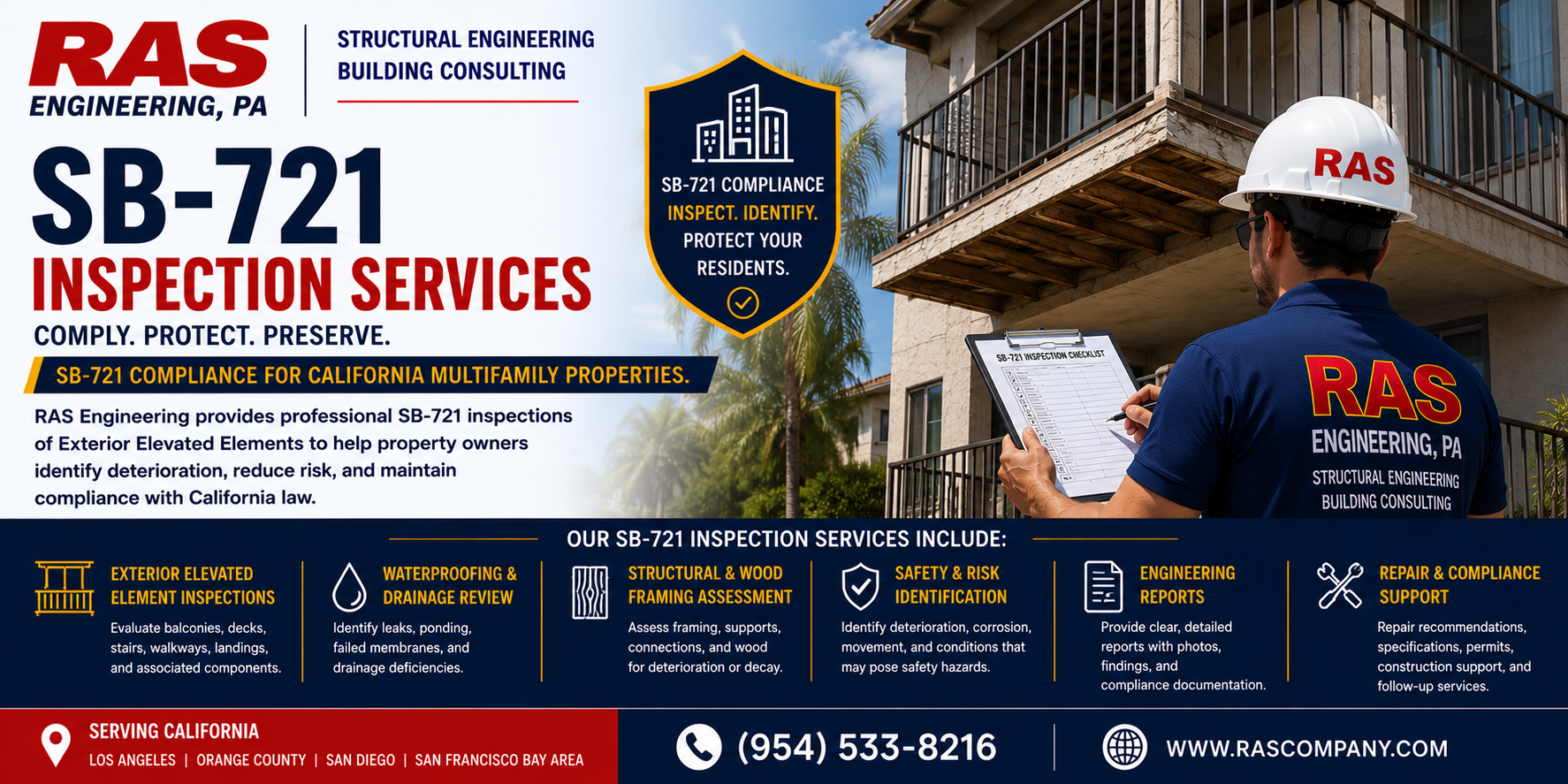
RAS Engineering, PA provides professional SB-721 inspection services for apartment owners, multifamily property owners, property managers, investors, developers, and building operators in California. Our team evaluates Exterior Elevated Elements such as balconies, decks, porches, stairs, landings, walkways, railings, and associated waterproofing systems to help property owners identify deterioration, reduce safety risk, and maintain compliance with California balcony inspection requirements.
What Is SB-721?
California SB-721 applies to many multifamily residential buildings with three or more dwelling units that have exterior elevated elements supported in whole or in substantial part by wood. These elements are generally located more than six feet above adjacent grade and may include balconies, decks, stairs, walkways, porches, and similar exterior components.
The purpose of SB-721 is to improve resident safety by requiring periodic inspection of exterior elevated elements and their associated waterproofing systems.
Our SB-721 Inspection Services
RAS Engineering provides comprehensive SB-721 inspection support, including:
Exterior Elevated Element inspections
Balcony, deck, stair, landing, walkway, and railing evaluations
Waterproofing and drainage review
Wood framing and structural support assessment
Identification of deterioration, decay, corrosion, cracking, movement, or unsafe conditions
Moisture intrusion evaluation
Engineering report preparation
Repair recommendations
Compliance documentation
Construction support for required repairs
Follow-up review and closeout support
Common Conditions We Evaluate
Exterior elevated elements can deteriorate because of water intrusion, failed waterproofing, poor drainage, dry rot, corrosion, termite damage, structural movement, aging materials, or deferred maintenance.
Common issues include:
Wood decay or dry rot
Cracked or deteriorated walking surfaces
Failed waterproofing membranes
Leaks at deck or balcony transitions
Corroded connectors or fasteners
Loose railings or guardrails
Settlement or structural movement
Cracking, sagging, or deflection
Moisture damage below balcony or walkway systems
Unsafe or non-compliant conditions
Engineering Reports and Repair Recommendations
After the inspection, RAS Engineering can provide a professional report documenting observed conditions, photographs, findings, safety concerns, and recommended corrective action. If deterioration or unsafe conditions are identified, our team can assist with repair recommendations, repair specifications, permit support, contractor coordination, construction observations, and closeout documentation.
Why Choose RAS Engineering?
SB-721 compliance requires more than a basic visual walkthrough. Exterior elevated elements are structural systems that rely on framing, waterproofing, connections, drainage, and long-term maintenance to perform safely.
RAS Engineering provides engineering-based evaluations designed to help property owners understand the condition of their buildings, prioritize repairs, reduce liability, and protect residents.
Request SB-721 Inspection Services
If your apartment or multifamily property requires an SB-721 inspection, RAS Engineering can help evaluate the condition of your exterior elevated elements and provide clear engineering guidance for compliance and repairs.
Submit your project information through our contact form at:
RAS Engineering, PA
Structural Engineering • Building Consulting • SB-721 Inspections • Exterior Elevated Element Evaluations