

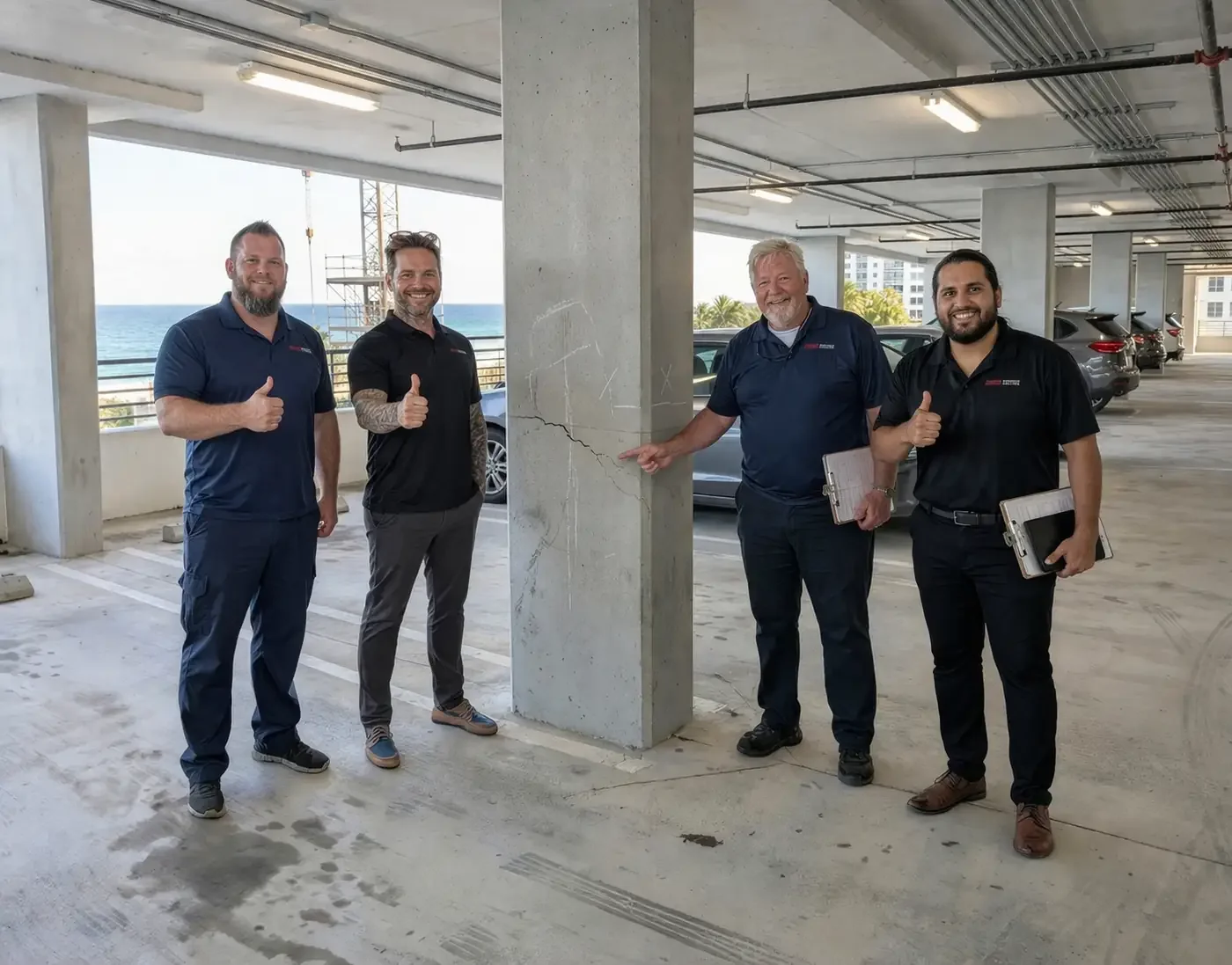
Protecting the Safety, Performance, and Lifespan of Parking Structures
Parking structures operate under constant stress. Daily vehicle traffic, moisture, deicing salts, temperature swings, and corrosion all contribute to gradual structural deterioration. Left unaddressed, these conditions can lead to cracking, spalling, reinforcing steel corrosion, weakened concrete, unsafe walking and driving surfaces, and growing liability concerns.
Our Parking Garage Inspection Division provides professional engineering inspections, structural assessments, and restoration planning for parking structures of all types. We help building managers and Boards of Directors understand existing conditions, identify early signs of deterioration, and make informed decisions that protect safety and extend service life.
Engineering Evaluations for Parking Garage Safety and Long-Term Performance
Parking garages are among the most exposed structural systems in any property portfolio. Unlike many enclosed building components, garages are continuously subjected to water, salts, traffic wear, and open-air environmental conditions. As a result, structural distress can develop long before it becomes obvious to owners or occupants.
Our engineers evaluate parking structures to determine current condition, identify active deterioration, and recommend practical repair strategies. Whether the goal is routine condition monitoring, investigation of visible damage, or planning for major restoration, we provide the technical guidance needed to support sound capital decisions.
Structural Parking Garage Inspections
Our team performs comprehensive structural inspections to identify deterioration, distress, corrosion, and unsafe conditions affecting the garage.
We inspect critical structural and functional components, including concrete slabs, beams, girders, columns, foundations, ramps, expansion joints, topping slabs, precast structural elements, drainage systems, guardrails, barriers, stair towers, and pedestrian areas.
These inspections help determine whether the structure remains safe for continued use, which areas require repair, and whether additional testing or monitoring is necessary.
Periodic Garage Condition Assessments
Many parking structures benefit from periodic condition assessments due to age, heavy use, deferred maintenance, or regulatory requirements. Even where inspections are not mandated, routine evaluations are one of the most effective ways to prevent unexpected structural failures and costly emergency repairs.
Our assessments identify cracking, structural movement, concrete delamination, spalling, reinforcing steel corrosion, failed expansion joints, waterproofing deficiencies, surface wear, and other conditions that can compromise long-term performance.
For building managers and Boards, these evaluations provide a clear basis for maintenance planning, budgeting, and phased capital repairs.
Phase 1 - Visual Structural Evaluations
A Phase 1 evaluation involves a visual inspection of accessible structural components and surfaces throughout the garage. This is often the first step in understanding whether visible conditions suggest routine wear or indicate more serious structural concerns.
During this process, our engineers look for slab, beam, and column cracking; rust staining associated with reinforcing steel corrosion; spalled concrete; exposed reinforcement; joint deterioration; water infiltration; surface breakdown; and signs of displacement or movement.
A Phase 1 inspection helps determine whether the structure appears stable based on visible conditions or whether a more detailed investigation should follow.
Phase 2 - Structural Investigation and Testing
When a visual evaluation reveals signs of significant distress or concealed deterioration, a more detailed Phase 2 investigation may be recommended.
Phase 2 services may include sounding and delamination mapping, corrosion testing, concrete core sampling, chloride testing, reinforcement evaluation, structural load assessment, selective destructive testing, and non-destructive testing methods.
These procedures help determine the extent and severity of deterioration, identify active corrosion mechanisms, and evaluate the structural implications for the garage. The result is a more accurate understanding of repair priorities and long-term risk.
Corrosion and Concrete Deterioration Evaluation
One of the most common causes of parking structure deterioration is corrosion of embedded reinforcing steel. Moisture and chlorides carried into the garage by vehicles can penetrate concrete and initiate corrosion, which expands the steel and leads to cracking, delamination, and spalling.
Our engineers evaluate corrosion activity, reinforcing steel condition, chloride contamination, slab delamination, and the remaining structural capacity of deteriorated elements. Understanding how corrosion is progressing is essential to developing repairs that not only restore damaged areas but also slow or prevent continued deterioration.
Waterproofing and Drainage Assessment
Water intrusion is a major contributor to parking garage damage. When drainage systems fail or waterproofing systems deteriorate, water remains in contact with concrete and embedded steel, accelerating deterioration and increasing repair costs.
We assess waterproofing membrane performance, drainage effectiveness, leaking expansion joints, ponding areas, moisture-related deterioration, and the condition of coatings and protective systems. Correcting these issues is often a critical part of any long-term repair strategy.
Parking Garage Repair and Restoration Planning
Once structural conditions are identified, we help clients develop repair and restoration programs tailored to the structure’s condition, budget, and operational needs.
Our services include repair scope development, corrosion mitigation strategies, structural repair recommendations, budgeting guidance, phased repair planning, construction document preparation, and construction observation. This approach helps owners address immediate safety concerns while also planning for durable, cost-effective repairs over time.
Types of Parking Structures We Inspect
Our Parking Garage Inspection Division evaluates a broad range of structures, including standalone parking garages, podium parking systems, residential condominium garages, commercial parking facilities, hospital and medical center garages, airport garages, university parking structures, municipal facilities, mixed-use garages, and underground parking structures.
Each type presents different structural demands, drainage conditions, exposure patterns, and maintenance challenges. Our evaluations are tailored to the specific construction type and operating environment of each facility.
Common Parking Garage Problems We Identify
Parking garages often show recurring patterns of deterioration that worsen when left untreated. Our inspections frequently identify concrete cracking and spalling, exposed reinforcing steel, corrosion of embedded reinforcement, slab delamination, failed expansion joints, drainage problems, water ponding, deteriorated coatings and sealers, structural displacement, corrosion of steel framing, and deterioration of ramps and traffic-bearing surfaces.
Identifying these problems early allows owners to intervene before conditions become more disruptive, more expensive, and more hazardous.
Our Inspection Process
Our process begins with a preliminary review of available drawings, previous inspection reports, repair history, and known problem areas. We then perform a detailed field inspection of structural elements, joints, surfaces, and drainage systems.
Depending on the structure and visible conditions, the field evaluation may include visual inspection, concrete sounding, delamination mapping, moisture review, corrosion indicators, and close-up observation of critical areas.
Observed conditions are analyzed to determine severity, causes, and structural significance. When needed, further testing is performed to verify hidden deterioration or corrosion activity. Clients then receive a detailed engineering report documenting conditions, photographs, location-based findings, safety concerns, and recommended repairs or monitoring.
Why Parking Garage Inspections Matter
Regular garage inspections are essential for protecting public safety and preserving the long-term value of the structure. Deterioration often develops gradually and may remain unnoticed until concrete becomes loose, leaks worsen, or structural repairs become urgent.
Routine evaluations help owners identify problems early, reduce liability exposure, support compliance with inspection requirements, extend service life, prioritize repairs, and avoid more extensive reconstruction. For Boards and property managers, they also provide the documentation needed to make informed maintenance and capital planning decisions.
Why Building Managers and Boards Choose Our Parking Garage Inspection Division
Clients choose our team because we provide licensed structural engineering expertise, extensive experience with parking structure deterioration, clear technical reporting, practical repair recommendations, and support from inspection through restoration.
We understand the need for objective findings, defensible engineering conclusions, and repair strategies that align with real-world property management and budgeting constraints. Our goal is to help clients maintain safe, functional parking facilities while planning proactively for long-term structural performance.
When to Schedule a Parking Garage Inspection
A professional evaluation should be considered when a garage is more than 15 to 20 years old, visible cracking or spalling is present, reinforcing steel is exposed, rust staining appears on concrete surfaces, water leaks or drainage issues are recurring, expansion joints have failed, concrete has become loose or fallen, or the structure has not been evaluated in several years.
Proactive inspections are especially valuable before deterioration advances to the point of emergency repair.
Schedule a Parking Garage Inspection
Our Parking Garage Inspection Division provides structural inspections, condition assessments, corrosion evaluations, and repair planning services for parking structures of all sizes.
Contact us today to schedule an evaluation and help protect the safety, performance, and lifespan of your parking facility.