

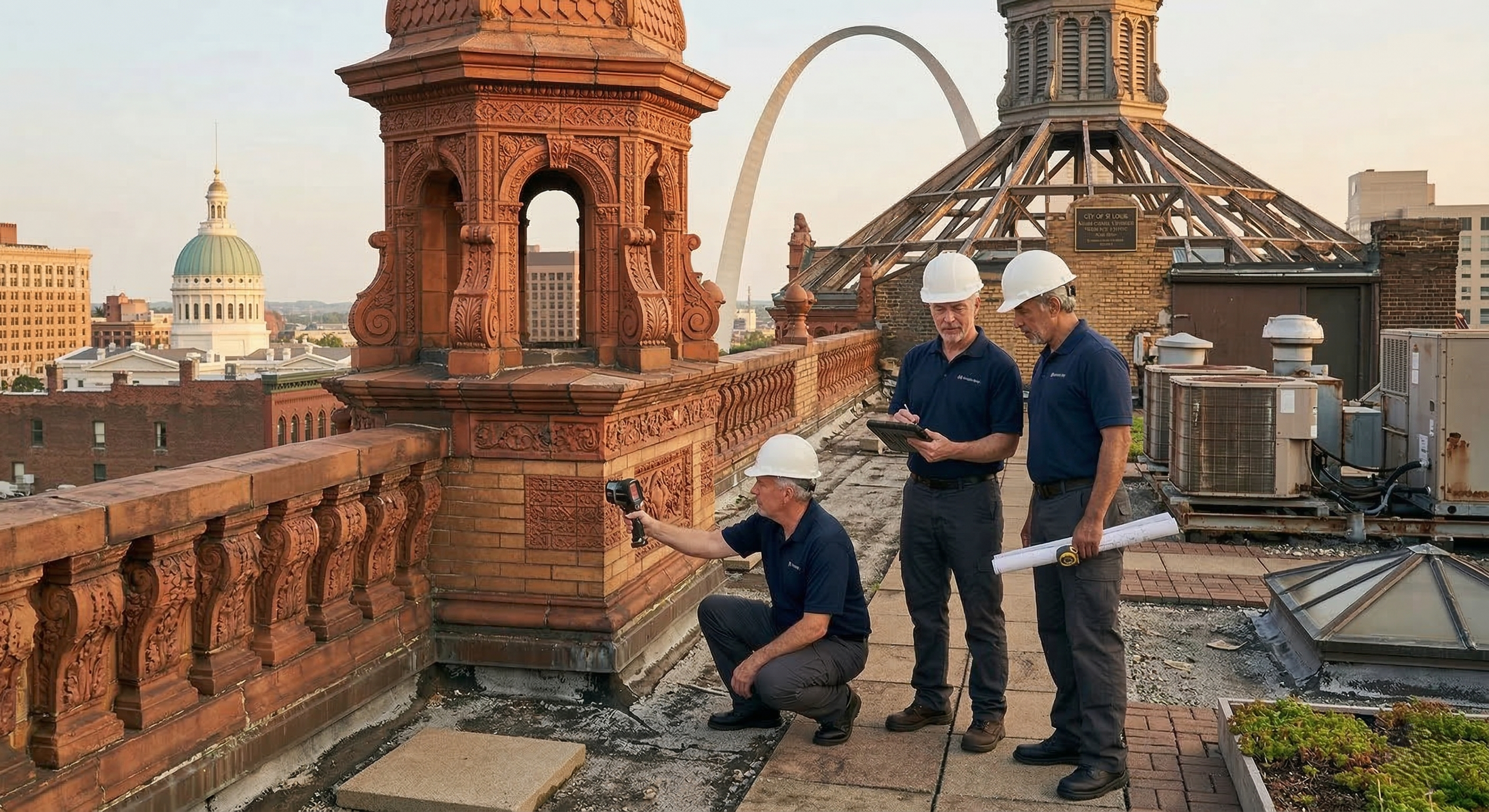
St. Louis Exterior Wall, Cornice & Façade Inspection Guide
Building Code Compliance for Property Owners and Managers
The City of St. Louis requires building owners to maintain exterior walls, cornices, balconies, fire escapes, and façade elements so they remain structurally sound and safe for occupants and pedestrians.
Over time, exposure to weather, moisture, and aging materials can lead to deterioration. If not properly addressed, these conditions can result in falling debris, unstable architectural elements, and safety hazards. A structured inspection and maintenance approach helps building owners and managers stay compliant and reduce risk.
Understanding St. Louis Façade Compliance Requirements
Owner Responsibility for Exterior Structures
Building owners are responsible for maintaining exterior components in a safe condition, even when day-to-day operations are handled by property managers or associations.
Purpose of the Code Requirements
The building code is intended to:
Prevent falling hazards
Maintain structural integrity
Protect occupants and pedestrians
Ensure ongoing building safety
Commonly Affected Properties
Multi-story residential buildings
Condominium and cooperative properties
Commercial and office buildings
Mixed-use developments
Hotels and institutional facilities
Responsibility Structure
Compliance responsibility remains with the building owner regardless of management structure.
Exterior Components Covered by the Code
Exterior Wall Systems
Structural and Cladding Systems
Brick, stone, and masonry façades
Concrete or precast panels
Exterior cladding systems
Structural framing supporting exterior walls
Cornices and Architectural Projections
Decorative and Structural Elements
Cornices and parapets
Ornamental façade features
Exterior projections attached to the building
Balconies and Elevated Platforms
Structural Components
Balcony slabs and framing
Guardrails and anchorage systems
Load-bearing structural elements
Fire Escapes
Safety-Critical Systems
Platforms and ladders
Structural connections to the building
Corrosion-prone components
These elements require monitoring because deterioration can create falling hazards or structural risks.
Common Façade Conditions Identified
Early Signs of Deterioration
Typical Issues
Masonry cracking or displacement
Concrete spalling or surface deterioration
Corrosion of steel anchors or connections
Water infiltration and freeze-thaw damage
Loose cornices or architectural projections
Structural deterioration of balconies or platforms
Risks of Deferred Maintenance
If left unaddressed, these conditions can lead to:
Falling debris hazards
Structural instability
Emergency repair situations
Increased long-term repair costs
Inspection Expectations for Building Owners
Typical Inspection Practices
Visual and Close-Up Evaluations
Exterior wall inspection
Cornice and projection review
Balcony and railing evaluation
Fire escape inspection
Photographic documentation
Access Methods
Inspection Techniques
Depending on building height and complexity:
Ground-level observation
Aerial lifts or scaffolding
Rope access or swing stages
Drone-assisted observation
These methods help ensure accurate evaluation of façade conditions.
Who Can Perform Façade Inspections
Qualified Professionals
Licensed Experts
Missouri-licensed Professional Engineers (PE)
Missouri-licensed Registered Architects (RA)
Role of the Inspector
Qualified professionals evaluate structural integrity, identify hazards, and recommend repair strategies.
Inspection Reports and Documentation
What Reports Include
Key Components
Description of observed conditions
Photographic documentation
Identification of safety hazards
Recommended repairs or monitoring
Importance of Clear Reporting
Well-prepared reports support compliance, repair planning, and communication with stakeholders.
Required Actions for Unsafe Conditions
Immediate Response Measures
Safety and Stabilization
Install sidewalk protection or barriers
Restrict access to hazardous areas
Remove loose or unstable materials
Permanent Repair Actions
Corrective Work
Structural repairs and stabilization
Replacement of deteriorated components
Engagement of qualified contractors
Failure to address unsafe conditions may result in enforcement actions or liability exposure.
Documentation and Compliance Records
Maintaining Records
Important Documentation
Inspection reports from engineers or architects
Photographic records of façade conditions
Repair scopes and contractor documentation
Certification of completed work
Why Documentation Matters
These records may be required for:
City inspections or enforcement
Insurance underwriting
Property refinancing
Real estate transactions
How RAS Engineering Supports Façade Compliance
Connecting with Qualified Professionals
Available Services
Licensed engineers and architects
Masonry and façade restoration contractors
Waterproofing specialists
Scaffolding and access providers
Streamlining Coordination
Using a coordinated platform helps:
Identify qualified professionals quickly
Reduce project delays
Improve coordination between inspection and repair teams
Penalties and Liability Risks
Consequences of Non-Compliance
Potential Risks
Civil penalties and enforcement actions
Orders requiring immediate repairs
Increased liability exposure
Insurance complications
Risk Reduction
Proactive inspection and maintenance programs significantly reduce these risks.
A Practical Façade Compliance Strategy
Proactive Approach
Recommended Steps
Schedule periodic exterior wall inspections
Monitor cornices, balconies, and projections
Inspect fire escapes regularly
Address deterioration early
Maintain organized documentation
Coordinating Inspection and Repair
Working with qualified professionals helps streamline compliance and reduce project uncertainty.
Key Takeaway
St. Louis building maintenance requirements place responsibility on owners to ensure exterior walls, cornices, balconies, fire escapes, and façade elements remain safe and secure.
Regular inspections, early repairs, and proper coordination help protect occupants, reduce risk, and preserve long-term property value.
Schedule a Façade Inspection
If your building requires inspection or compliance support, professional guidance can help you move forward with clarity.
Contact us to schedule a consultation and ensure your building meets St. Louis façade safety requirements.
St. Louis building codes require owners to maintain exterior walls, cornices, balconies, fire escapes, and façade elements in a safe condition.
Regular inspections, early repairs, and proper coordination help protect safety, reduce risk, and maintain property value.
H2: Schedule a Façade Inspection
If your building requires inspection or compliance support, professional guidance can help you move forward with clarity.
Contact us to schedule a consultation and ensure your building meets St. Louis façade safety requirements. St. Louis Façade Compliance Requirements