
Columbus Exterior Wall & Appurtenant Structure Inspection Guide
Columbus City Code 4109.073 for Building Owners & Property Managers
Columbus City Code 4109.073 requires building owners to maintain exterior walls and appurtenant structures so they remain structurally sound and do not create hazards to occupants, pedestrians, or adjacent property.
Over time, exterior building components can deteriorate because of weather exposure, water infiltration, freeze-thaw cycles, corrosion, settlement, and aging materials. If left unaddressed, these conditions can lead to falling masonry, loose façade elements, deteriorated parapets, unstable balconies, and other safety risks.
To reduce these hazards, building owners are expected to monitor the condition of exterior wall systems and attached architectural elements, arrange inspections when required, and correct unsafe conditions promptly.
This guide explains who must comply, what building components are typically covered, inspection expectations, corrective actions, and how property owners and managers can manage Columbus façade compliance effectively.
Who Must Comply with Columbus City Code 4109.073
Columbus exterior wall requirements generally apply to building owners responsible for maintaining structures within the city, particularly where exterior wall deterioration could create a public safety concern.
Buildings commonly affected include:
multi-story residential buildings
condominium and cooperative properties
apartment buildings
office and commercial buildings
mixed-use developments
hospitality and institutional properties
Responsibility for compliance rests with the building owner, even if day-to-day operations are handled by a property management company, condominium association, or other third party.
Owners must ensure that exterior wall systems and appurtenant structures remain secure, stable, and properly maintained.
What Are Exterior Walls and Appurtenant Structures
Under Columbus City Code 4109.073, inspections and maintenance typically address both exterior wall systems and appurtenant structures attached to the building.
Appurtenant structures are exterior elements connected to the building that may become hazardous if they deteriorate or loosen over time.
Typical components include:
Exterior Wall Systems
brick and masonry façades
stone cladding
concrete and precast wall panels
stucco or exterior cladding systems
curtain wall assemblies
Appurtenant Structures
parapets and cornices
balconies and exterior platforms
canopies and overhangs
decorative architectural projections
lintels, sills, and coping elements
Structural Attachments
anchors and fasteners
reinforcing steel
support framing connected to façade components
connections supporting projections and attachments
These components are monitored because deterioration can lead to structural instability or falling hazards.
Common Conditions Identified During Exterior Wall Inspections
Exterior wall inspections often identify early signs of deterioration that can become more serious if not addressed.
Common problems include:
masonry cracking or displacement
deteriorated mortar joints
spalling concrete
corrosion of steel supports or anchors
water infiltration and moisture-related damage
freeze-thaw deterioration
loose parapets or decorative elements
movement or separation of façade materials
deteriorated balconies or exterior projections
Identifying these conditions early helps owners make repairs before they become costly or dangerous.
What Gets Inspected
A typical exterior wall inspection evaluates the condition of the building façade and related appurtenant structures.
Inspection areas may include:
Exterior Wall Materials
brick, stone, masonry, and concrete surfaces
cladding systems and exterior panels
façade joints and sealants
signs of cracking, movement, or displacement
Architectural Features
parapets and cornices
balconies and railings
canopies, overhangs, and decorative projections
window surrounds, sills, and lintels
Structural Support Conditions
anchors and fasteners
steel framing and reinforcement
support conditions for attached façade elements
Inspectors also evaluate visible indicators of distress such as:
cracking
rust staining
displacement
spalling
water leakage
loose materials
structural movement
Exterior Wall Inspection Expectations
Although compliance requirements may vary depending on building type, age, and location, many building owners schedule periodic exterior wall inspections to verify safety and reduce compliance risk.
Typical inspection practices include:
visual examination of façade surfaces
observation of parapets and projections
review of balconies and attached elements
photographic documentation of conditions
identification of visible hazards or deterioration
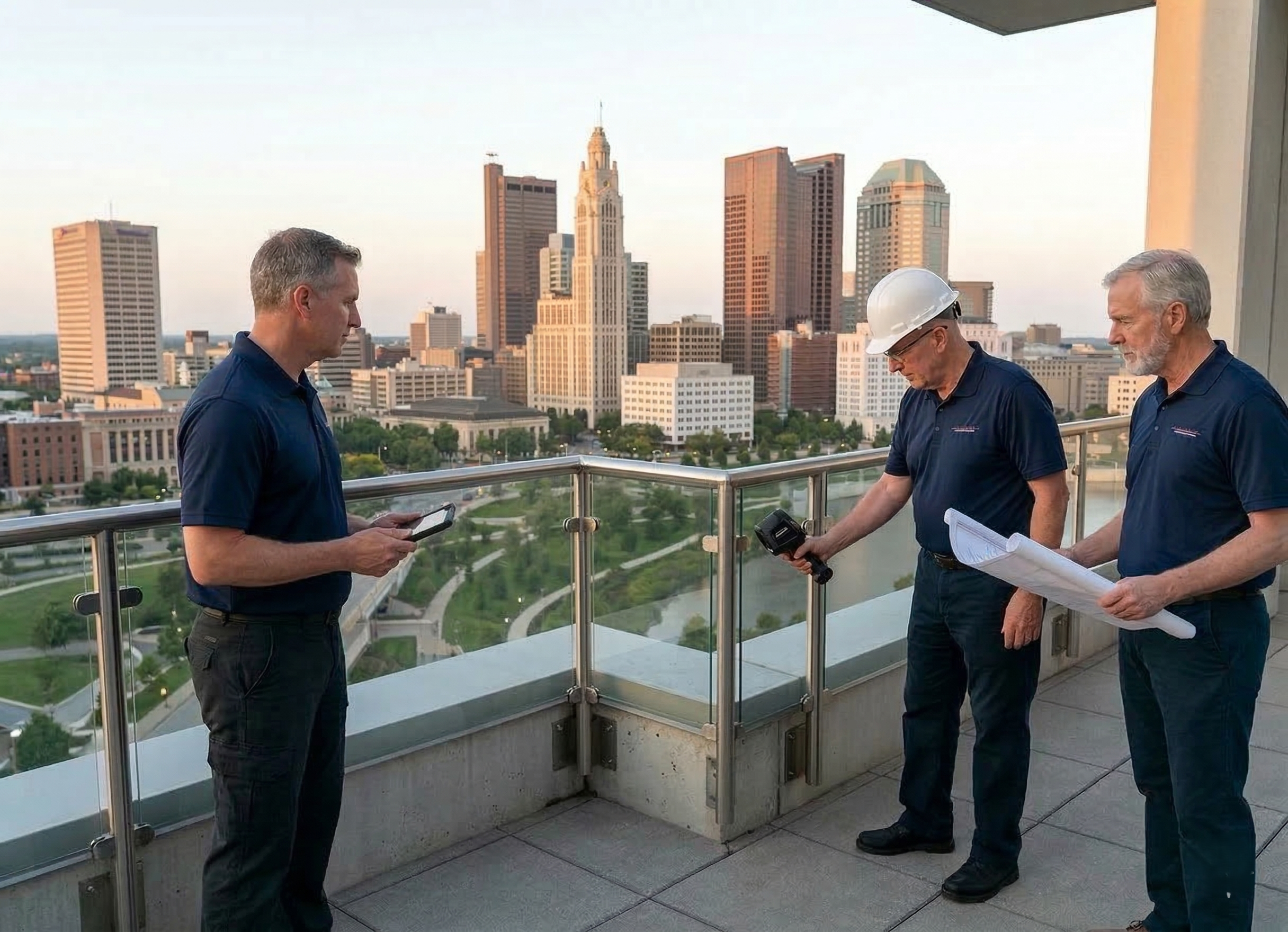
For taller or more complex buildings, inspections may involve:
aerial lifts
scaffolding or swing stages
rope access
drone-assisted observation
close-up evaluation of selected areas
These methods help professionals assess conditions that cannot be seen clearly from the ground.
Who Can Perform Exterior Wall Inspections
Routine maintenance observations may be handled by building staff, but structural or code-related façade evaluations are generally best performed by licensed design professionals.
Qualified professionals may include:
Ohio-licensed Professional Engineers (PE)
Ohio-licensed Registered Architects (RA)
These professionals have the training to evaluate exterior wall systems, determine whether deterioration presents a safety risk, and recommend corrective measures.
Inspection reports often include:
a description of observed conditions
photographs of deficiencies
identification of hazardous areas
repair recommendations or further testing needs
Required Actions When Unsafe Conditions Are Found
If exterior walls or appurtenant structures are found to be unsafe, building owners should take corrective action promptly.
Typical actions may include:
installing temporary pedestrian protection
restricting access near affected areas
removing loose or unstable materials
stabilizing façade elements
performing structural or restoration repairs
obtaining follow-up certification after corrective work
Unsafe conditions that are not addressed may lead to code enforcement, increased liability, or emergency repair orders.
Documentation and Recordkeeping
Maintaining inspection and repair records is an important part of effective façade compliance management.
Important records may include:
inspection reports from licensed engineers or architects
photographs documenting existing conditions
contractor proposals and repair documentation
records of completed corrective work
certifications confirming repairs were made
These records can be important for:
city inspections and enforcement reviews
insurance underwriting
refinancing and due diligence
real estate transactions
long-term capital planning
Penalties and Risks of Non-Compliance
Failure to maintain exterior walls and appurtenant structures can expose owners to significant risk.
Potential consequences include:
municipal violations or enforcement actions
orders for emergency stabilization
required public protection measures
increased liability if falling debris causes injury
insurance complications
financing or transaction delays
A proactive inspection and repair program is the best way to reduce these risks.
A Practical Columbus Exterior Wall Compliance Strategy
Building owners and property managers can manage exterior wall compliance more effectively by following a structured approach:
Confirm whether your building is subject to exterior wall inspection requirements
Schedule inspections before visible deterioration becomes severe
Monitor parapets, balconies, cornices, and projections regularly
Engage licensed engineers or architects when structural concerns arise
Document inspections, repairs, and completed corrective work
Budget for maintenance and restoration before conditions become hazardous
A proactive strategy helps owners reduce liability, avoid emergency conditions, and preserve property value.
Why Early Action Matters
Exterior wall problems often begin as minor visible defects but can worsen over time because of moisture, corrosion, thermal movement, and weather exposure.
Early inspection and repair helps:
protect occupants and pedestrians
reduce the chance of falling hazards
prevent more extensive structural deterioration
extend façade service life
lower long-term repair costs
improve code compliance and insurability
Key Takeaway
Columbus City Code 4109.073 requires building owners to maintain exterior walls and appurtenant structures so they remain structurally sound and safe.
Owners and property managers who inspect façades regularly, address deterioration early, and work with qualified professionals are best positioned to maintain compliance, reduce liability, and protect the long-term value of their buildings.