

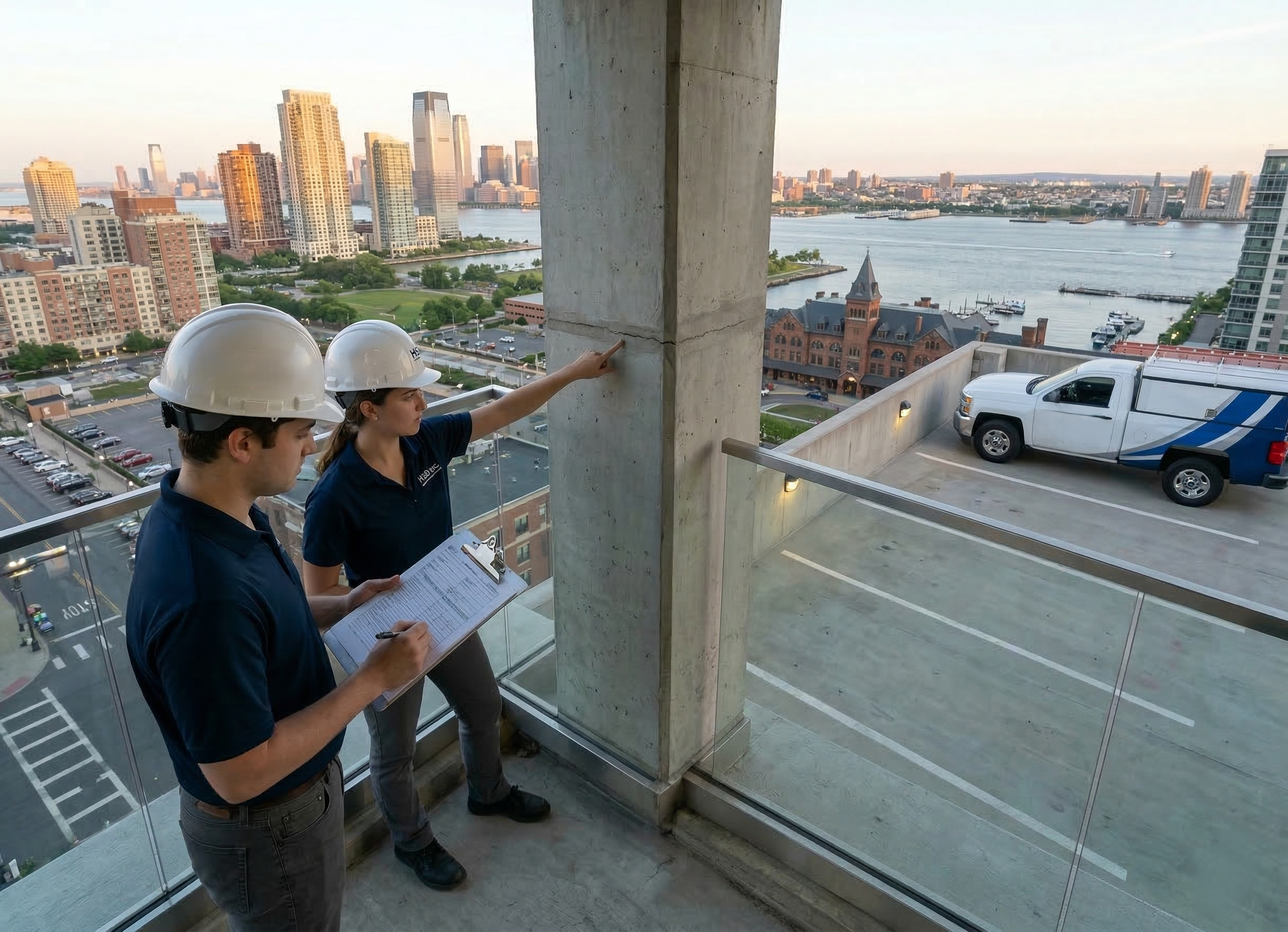
Jersey City Exterior Wall Inspection Compliance Guide
Ordinance 21-054 for Building Owners & Property Managers
Jersey City Ordinance 21-054 establishes a citywide Exterior Wall Inspection Program designed to prevent façade failures and protect pedestrians, occupants, and surrounding property.
Over time, exterior walls and façade components can deteriorate due to weather exposure, water infiltration, structural movement, and aging materials. These conditions can lead to falling masonry, loose façade elements, or structural hazards if not identified early.
To address these risks, Jersey City requires certain buildings to undergo periodic exterior wall inspections performed by a licensed design professional.
This guide explains who must comply, what gets inspected, inspection cycles, reporting requirements, and how building owners and managers can manage façade compliance efficiently.
Who Must Comply with Jersey City Ordinance 21-054
Jersey City’s exterior wall inspection ordinance applies primarily to taller buildings where façade deterioration could create hazards for pedestrians or occupants.
Buildings typically subject to the ordinance include:
• Residential buildings with multiple stories
• Condominium and cooperative buildings
• Commercial and office properties
• Mixed-use developments
• Institutional and hospitality buildings
Responsibility for compliance rests with the property owner, even when the property is operated by a property manager or condominium association.
Owners must ensure inspections are completed within the required timeframe and that hazardous façade conditions are corrected promptly.
What Gets Inspected
The ordinance requires inspection of exterior walls and architectural components attached to the façade that could deteriorate or become unstable.
Inspection areas generally include:
Exterior wall systems
• Brick, stone, and masonry façades
• Concrete or precast panels
• Exterior cladding systems
• Curtain wall assemblies
Architectural elements and projections
• Parapets and cornices
• Window lintels and sills
• Decorative façade elements
• Balconies and exterior projections
Structural attachments
• Anchors and fasteners supporting façade components
• Reinforcement and structural framing
• Connections attaching façade elements to the building structure
Inspectors also evaluate conditions caused by:
• Masonry cracking or displacement
• Concrete spalling
• Corrosion of steel anchors or reinforcement
• Water infiltration and freeze-thaw damage
These issues can worsen over time and create falling hazards or structural instability if left unaddressed.
Exterior Wall Inspection Cycle
Under Jersey City Ordinance 21-054, exterior wall inspections must be conducted on a recurring cycle established by the city’s Division of Construction Code Enforcement.
Inspection timing may depend on factors such as:
• Building height
• Building age
• Prior inspection findings
• Structural complexity
Owners should plan inspections well in advance of deadlines, since qualified façade engineers and architects often have limited availability.
Who Can Perform Exterior Wall Inspections
Exterior wall inspections must be conducted by a licensed design professional qualified to evaluate structural and façade conditions.
Qualified professionals typically include:
• New Jersey-licensed Professional Engineers (PE)
• New Jersey-licensed Registered Architects (RA)
The inspecting professional must have expertise in façade evaluation and structural safety.
Inspection reports generally include:
• Description of observed conditions
• Photographic documentation
• Professional certification of findings
• Recommended repairs or maintenance actions
Inspection Results & Condition Classifications
After completing the inspection, the design professional evaluates the building façade and determines whether corrective action is required.
Typical outcomes include:
Safe
The exterior wall system is structurally sound and poses no immediate safety risk.
Routine maintenance may still be recommended.
Repairs Required
Deterioration is present but does not currently present an immediate hazard.
Examples may include:
• Masonry cracking
• Early corrosion of façade anchors
• Water infiltration affecting façade materials
Repairs should be completed within the timeframe recommended by the inspecting professional.
Unsafe Condition
An unsafe classification indicates that façade elements present a potential or immediate hazard.
When unsafe conditions are identified, building owners may be required to:
• Install temporary public protection measures
• Restrict access near affected areas
• Perform emergency stabilization or repairs
• Submit certification after corrective work is completed
City enforcement actions may follow if unsafe conditions are not addressed promptly.
Filing & Documentation Requirements
Building owners must maintain records demonstrating compliance with Jersey City’s exterior wall inspection program.
Important documentation includes:
• Inspection reports prepared by licensed professionals
• Photographs documenting façade conditions
• Repair plans and contractor documentation
• Certification confirming completion of corrective work
Maintaining proper documentation helps support compliance with:
• City inspection requirements
• Insurance underwriting
• Property refinancing
• Real estate transactions
How rascompany.com Helps with Jersey City Façade Compliance
Managing façade inspections and repairs often requires coordination between engineers, contractors, and façade access specialists.
rascompany.com helps Jersey City building owners and property managers streamline façade compliance by connecting them with vetted professionals experienced in exterior wall inspections and restoration projects.
Through rascompany.com you can find:
• Licensed façade engineers and architects
• Masonry and façade restoration contractors
• Waterproofing and structural repair specialists
• Scaffolding and façade access providers
Using rascompany.com allows owners to:
• Quickly identify qualified inspection professionals
• Coordinate inspections and repairs efficiently
• Reduce compliance risk by working with experienced specialists
This integrated approach helps projects move efficiently from inspection to repair to final compliance.
Penalties and Risks of Non-Compliance
Failure to comply with Jersey City’s exterior wall inspection ordinance may result in enforcement actions.
Potential consequences include:
• Civil penalties and fines
• Orders to install public protection measures
• Mandatory façade repairs
• Increased liability exposure if façade failures occur
Open violations can also affect:
• Insurance coverage
• Property refinancing
• Real estate transactions
Proactive inspections and maintenance programs significantly reduce these risks.
A Practical Jersey City Façade Compliance Strategy
Building owners and property managers can manage compliance more effectively by following a structured approach:
Confirm whether your building is subject to Ordinance 21-054
Schedule façade inspections early with a licensed engineer or architect
Plan façade access and inspection logistics in advance
Budget for potential repairs identified during inspections
Maintain documentation and follow recommended repair timelines
Using a professional matching platform like rascompany.com can simplify coordination between inspectors and contractors.
Key Takeaway
Jersey City’s Exterior Wall Inspection Program under Ordinance 21-054 is designed to prevent façade failures and protect public safety.
Building owners who schedule inspections early, address deterioration promptly, and coordinate qualified professionals effectively are best positioned to maintain compliance while protecting property value and minimizing liability.
Professional matching services such as rascompany.com help streamline the process by connecting building owners and managers with the engineers and contractors needed to move from inspection to repair and full compliance.