

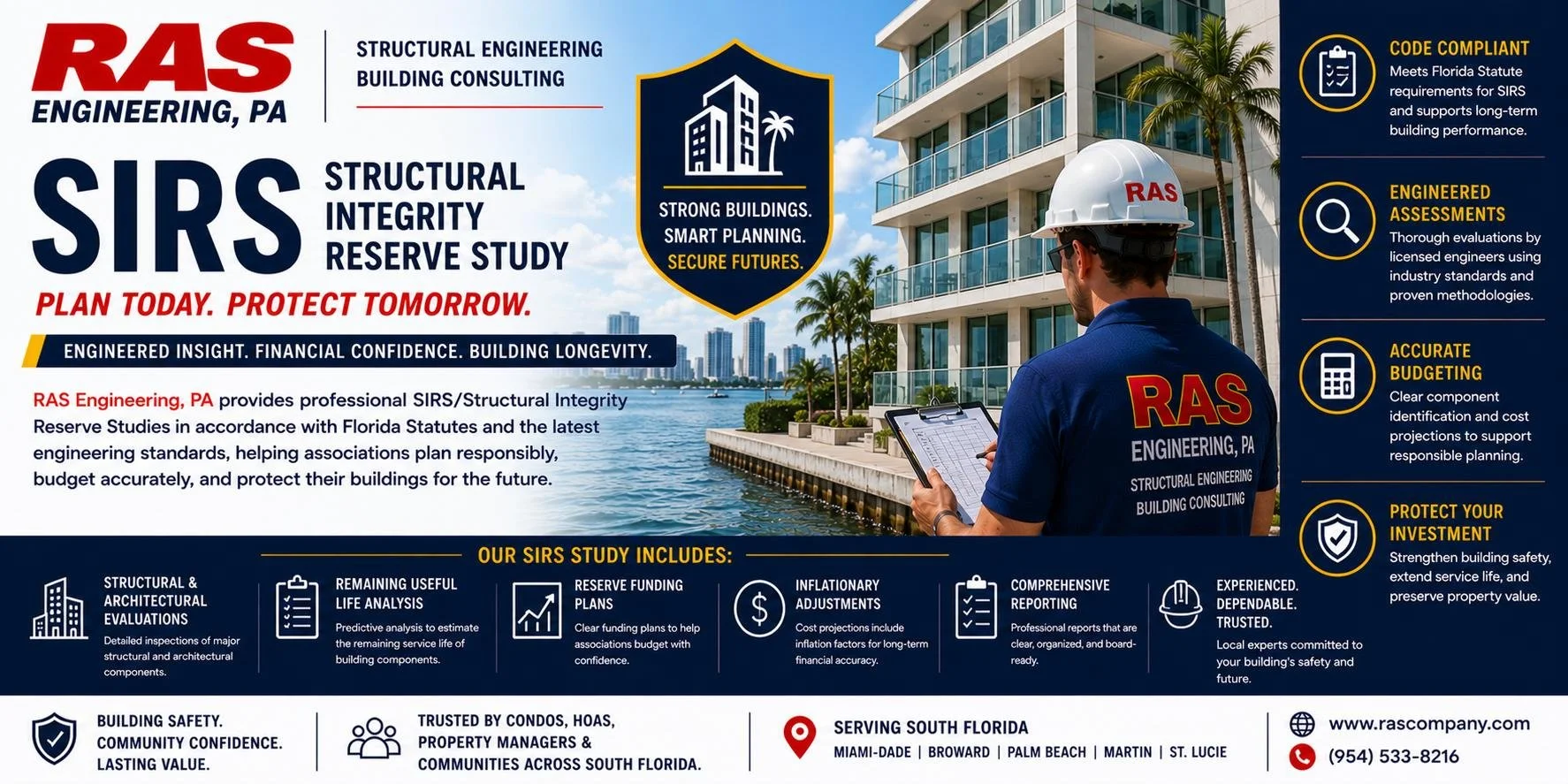
SIRS - Structural Integrity Reserve Study
FLORIDA
SIRS Compliance Guide for Condominium Associations, HOA Boards & Property Managers
Florida’s Structural Integrity Reserve Study (SIRS) requirement was enacted to ensure condominium associations properly fund critical structural and life-safety components of their buildings. SIRS is not optional—it is a statutory funding and planning requirement designed to prevent deferred maintenance and reduce the risk of structural failure.
If your condominium association is subject to Florida’s SIRS law, you must complete a compliant study, fund reserves accordingly, and integrate the results into your annual budget and long-term planning.
This page explains what SIRS is, who must comply, what components are included, deadlines, funding rules, and how to efficiently coordinate professionals to achieve compliance.
⸻
What is a Structural Integrity Reserve Study (SIRS)?
A Structural Integrity Reserve Study (SIRS) is a detailed financial and engineering analysis that:
• Identifies critical structural and life-safety building components
• Estimates remaining useful life of those components
• Projects future repair or replacement costs
• Establishes required reserve funding levels
Unlike traditional reserve studies, SIRS reserves cannot be waived or reduced by owner vote.
SIRS is governed by Florida Statute §718.112(2)(g) and is closely linked to Milestone Inspection findings.
⸻
Who must comply
SIRS applies to Florida condominium associations that meet all of the following criteria:
• Buildings are three (3) or more stories in height
• The association is responsible for maintaining structural components
• The building is subject to Milestone Inspection requirements
Responsibility rests with the condominium association and its board of directors, even when professional management is in place.
⸻
SIRS deadlines & frequency
Initial SIRS deadline
• Associations must complete their first SIRS by December 31, 2024 (or by the statutory deadline applicable at the time of turnover or inspection).
Ongoing updates
• SIRS must be updated at least every 10 years
• Annual budgets must reflect fully funded reserve contributions based on the SIRS
Failure to update or fund reserves properly can result in statutory non-compliance.
⸻
What components must be included in a SIRS
Florida law requires SIRS to include, at a minimum, the following structural and life-safety components (when applicable):
• Roof systems
• Load-bearing walls and structural framing
• Foundations
• Floor systems and slabs
• Balconies, decks, and exterior elevated elements
• Stairways and walkways
• Waterproofing and exterior cladding systems
• Fireproofing and life-safety systems
These components are considered mandatory reserves and cannot be waived.
⸻
Who can prepare a SIRS
A compliant SIRS must be prepared by a qualified professional, which may include:
• Florida-licensed Professional Engineer (PE)
• Florida-licensed Registered Architect (RA)
• Other professionals with appropriate construction and reserve-study expertise, as allowed by statute
The preparer must be capable of evaluating structural condition, remaining useful life, and repair cost projections—not just financial modeling.
⸻
How rascompany.com helps with SIRS compliance
SIRS compliance often requires coordination between engineers, reserve specialists, and repair professionals, particularly when Milestone Inspection findings must be incorporated.
rascompany.com helps condominium associations and boards by matching them with vetted SIRS professionals, including:
• Licensed engineers and architects qualified to perform SIRS evaluations
• Reserve study specialists experienced with Florida statutory requirements
• Structural, concrete, balcony, and waterproofing contractors for cost validation and repair planning
Using rascompany.com allows associations to:
• Quickly identify qualified SIRS preparers
• Align SIRS assumptions with real-world repair conditions
• Reduce the risk of underfunding or non-compliant reserve calculations
This integrated approach supports accurate budgeting and long-term asset protection.
⸻
Relationship between SIRS and Milestone Inspection
SIRS and Milestone Inspections are closely connected:
• Milestone Inspections identify structural deficiencies
• SIRS determines how those deficiencies will be funded over time
If a Milestone Inspection identifies substantial structural deterioration, the SIRS must:
• Reflect updated remaining useful life estimates
• Account for required repairs or replacements
• Ensure adequate reserve funding
Ignoring this connection can expose boards to compliance and fiduciary risks.
⸻
Funding rules & owner voting
Key SIRS funding rules include:
• No waiver or reduction of SIRS reserves by owner vote
• Annual budgets must include full reserve funding
• Funds must be used only for their designated components
Failure to follow these rules may constitute a breach of statutory and fiduciary duties.
⸻
Penalties & risks of non-compliance
Non-compliance with SIRS requirements can result in:
• Statutory violations
• Increased exposure to board liability claims
• Difficulty obtaining financing or insurance
• Increased risk of emergency assessments
• Regulatory and legal scrutiny
SIRS compliance is a financial, legal, and life-safety obligation.
⸻
A practical SIRS compliance strategy
1. Confirm whether your association is subject to SIRS
2. Engage a qualified SIRS professional early
3. Coordinate SIRS with Milestone Inspection findings
4. Incorporate required reserves into annual budgets
5. Update the study and funding regularly
Using a matching platform like rascompany.com can simplify steps 2–4 by connecting associations with experienced SIRS professionals who understand both engineering and statutory requirements.
⸻
Key takeaway
Florida’s Structural Integrity Reserve Study requirement ensures condominium associations plan and fund critical structural components responsibly. Boards that approach SIRS proactively—using qualified professionals and accurate data—are best positioned to protect residents, preserve property value, and meet their legal obligations.
Leveraging professional matching services such as rascompany.com helps condominium associations navigate SIRS compliance with clarity, confidence, and reduced risk.
Structural Integrity Reserve Study (SIRS)
Florida condominium associations are facing a new era of structural safety and financial planning. Following legislative changes enacted after the Surfside condominium collapse, many associations are now required to perform a Structural Integrity Reserve Study (SIRS) to evaluate the condition of major building components and establish reserve funding for future repairs and replacements.
A SIRS is more than a financial exercise. It combines engineering evaluations, useful life analysis, replacement cost estimates, and long-term cash flow planning to help condominium associations protect residents, comply with Florida law, and avoid unexpected special assessments.
At RAS Engineering, we help condominium associations throughout South Florida understand their reserve obligations and develop practical strategies for maintaining safe, financially healthy communities.
What Is a SIRS?
A Structural Integrity Reserve Study (SIRS) is a specialized reserve study required for many Florida condominium associations. The study evaluates major structural and building components that are critical to the safety and long-term operation of the property.
The purpose of a SIRS is to determine:
The current condition of reserve components
The remaining useful life of each component
The estimated replacement or repair cost
The amount of reserve funding needed over time
Long-term cash flow projections
Unlike traditional reserve studies, a SIRS focuses specifically on structural and safety-related building systems that cannot simply be deferred indefinitely.
What Florida Law Requires a SIRS?
Florida enacted new condominium safety legislation following the Surfside tragedy to improve building safety and long-term maintenance planning.
The law requires qualifying condominium associations to perform Structural Integrity Reserve Studies and adequately fund reserves for designated building components.
The legislation works alongside Milestone Inspection requirements, creating a comprehensive framework for:
Structural inspections
Reserve funding
Repair planning
Long-term capital improvements
Owner transparency
Building safety
Associations should consult qualified engineers and legal professionals to understand their specific compliance obligations.
Which Associations Need a SIRS?
Many condominium associations in Florida are required to perform a SIRS.
Generally, the requirement applies to condominium buildings that:
Are three stories or taller
Contain structural components requiring reserve funding
Fall under Florida condominium statutes
Meet the applicable statutory criteria
Some associations may be exempt depending on their age, ownership structure, or other legal factors.
Because the rules continue to evolve, associations should consult a qualified engineering professional to determine their obligations.
Components Included in a SIRS
A SIRS evaluates major building components that are critical to the structural integrity and long-term operation of the property.
Components commonly included in a SIRS may include:
Roof systems
Structural framing
Load-bearing walls
Balconies
Waterproofing systems
Fireproofing
Exterior painting
Windows and glazing systems
Parking garages
Foundations
Seawalls
Plumbing systems
Electrical systems
Mechanical systems
Elevators
Swimming pools and recreational facilities
Each component is evaluated for condition, remaining useful life, and anticipated replacement costs.
How Does a SIRS Differ from a Traditional Reserve Study?
A traditional reserve study focuses primarily on budgeting for future repairs and replacements.
A SIRS, however, places greater emphasis on structural integrity and life-safety components.
A SIRS typically includes:
Engineering evaluations
Structural component assessments
Useful life analysis
Replacement cost estimates
Cash flow projections
Reserve funding recommendations
Because of the engineering and structural considerations involved, many associations choose firms with both engineering expertise and reserve study experience.
How Does a Milestone Inspection Relate to a SIRS?
Milestone Inspections and SIRS requirements are closely related.
A Milestone Inspection evaluates whether substantial structural deterioration exists within a building.
A SIRS helps determine:
When components will require repair or replacement
How much money should be reserved
Long-term funding needs
Capital improvement priorities
Together, these programs help associations make informed decisions regarding safety, maintenance, and financial planning.
Reserve Funding and Cash Flow Planning
One of the primary goals of a SIRS is to establish a long-term reserve funding strategy.
Reserve funding helps associations:
Avoid large special assessments
Plan for major repairs
Improve financial stability
Protect property values
Maintain compliance with Florida law
The study projects anticipated repair and replacement expenses over many years and estimates the annual contributions required to meet future obligations.
A well-funded reserve program provides associations with greater flexibility and reduces the financial burden on owners when major projects become necessary.
What Happens if Reserves Are Underfunded?
Underfunded reserves can create significant challenges for condominium associations.
Potential consequences include:
Special assessments
Deferred maintenance
Increased repair costs
Reduced property values
Financing difficulties
Increased insurance costs
Emergency repairs
Greater financial uncertainty
The purpose of a SIRS is not simply to comply with the law—it is to help associations avoid these risks and plan responsibly for the future.
Why Choose RAS Engineering for SIRS Services?
RAS Engineering combines structural engineering expertise with practical experience in building restoration, reserve planning, and condominium consulting.
Our team helps associations:
Perform Structural Integrity Reserve Studies
Evaluate reserve components
Assess structural conditions
Estimate repair and replacement costs
Develop long-term funding plans
Coordinate with Milestone Inspections
Prioritize capital improvement projects
Prepare boards for future financial obligations
We understand the unique challenges facing Florida condominium associations and provide practical recommendations that balance safety, compliance, and financial responsibility.
Frequently Asked Questions
What is a Structural Integrity Reserve Study?
A Structural Integrity Reserve Study (SIRS) is an engineering and financial evaluation of major building components that estimates their remaining useful life, replacement costs, and reserve funding needs.
Who is required to perform a SIRS?
Many Florida condominium associations with buildings three stories or taller are required to perform a SIRS. Requirements vary based on the type of property and applicable statutes.
What components are included in a SIRS?
Common components include roofs, balconies, parking garages, structural framing, waterproofing systems, windows, mechanical systems, plumbing, electrical systems, elevators, and other major building systems.
How often must a SIRS be updated?
Florida law establishes periodic update requirements to ensure reserve studies remain accurate and reflect the current condition of building components.
Can reserve funding be waived?
Current Florida law significantly limits the ability of associations to waive reserve funding for certain structural and safety-related components.
How does a SIRS affect monthly assessments?
A SIRS may increase reserve contributions if the association has historically underfunded reserves. However, adequate reserves often reduce the likelihood of large special assessments in the future.
What is the difference between a SIRS and a Milestone Inspection?
A Milestone Inspection evaluates structural safety and deterioration. A SIRS evaluates reserve funding needs and future repair costs. The two programs are complementary and often rely on similar building information.
Can a SIRS reduce special assessments?
While no study can eliminate the possibility of special assessments, a properly funded reserve program significantly reduces the risk of unexpected financial burdens on owners.
Who should prepare a SIRS?
Associations should consider firms with experience in structural engineering, reserve studies, building restoration, and long-term capital planning.
How can RAS Engineering help?
RAS Engineering provides comprehensive SIRS services throughout South Florida, helping associations understand their buildings, plan for the future, and maintain compliance with Florida condominium safety requirements.
Schedule a SIRS Consultation
If your condominium association needs a Structural Integrity Reserve Study or wants to better understand reserve funding requirements, RAS Engineering can help.
Our team provides engineering evaluations, reserve studies, and long-term capital planning services designed to protect your building, your residents, and your financial future.