

Solving Vibration Transmission from a Rooftop Chiller into Luxury Penthouse Residences
When HVAC Equipment Becomes a Residential Comfort Problem
Building Type
22-Story Luxury Condominium
Location
Brickell Key, Miami, FL
Mechanical Equipment
245-Ton Rooftop Air-Cooled Chiller

The Challenge
Shortly after the installation of a new rooftop chiller, residents reported continuous vibration within penthouse units whenever the equipment was operating. Although the chiller provided adequate cooling, the vibration severely affected residential comfort and raised concerns regarding the mechanical installation and vibration isolation system.
RAS Engineering was retained to perform a forensic investigation to determine:
- The primary vibration source.
- Whether vibration was structure-borne or airborne.
- The effectiveness of the installed isolation system.
- Whether the installation complied with manufacturer recommendations.
- Appropriate corrective measures before final commissioning.
Engineering Investigation
Field testing included operating the chiller under multiple load conditions (approximately 25%, 50%, 75%, and 100% capacity) while comprehensive vibration measurements were collected simultaneously across the equipment and interior living spaces.
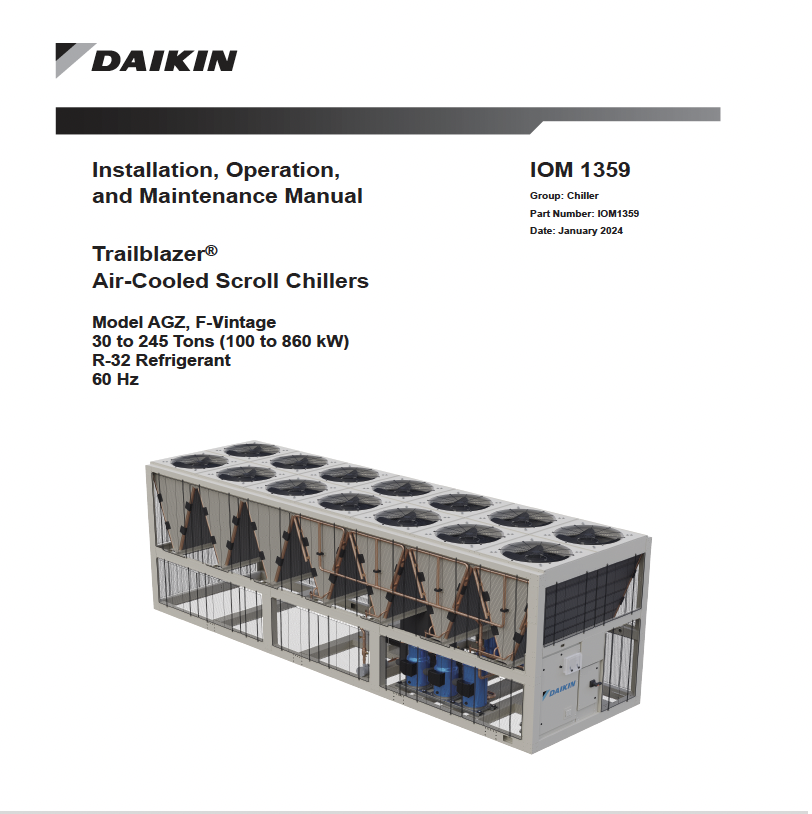
Manufacturer documentation for the ~245-ton rooftop air-cooled scroll chiller system.
Equipment Test Locations
- Compressor cabinet
- Chiller casing
- Structural support frame & steel beams
- Ductwork & transitions
Interior Penthouse Locations
- Balcony railing
- Master bathroom & bedroom
- Stair area and interior spaces
Key Findings
1. Structure-Borne Vibration Was the Primary Transmission Path
Measurements demonstrated that the highest vibration originated near the compressor section of the chiller. Dynamic loads were being transmitted directly into the supporting steel framing rather than being adequately isolated.
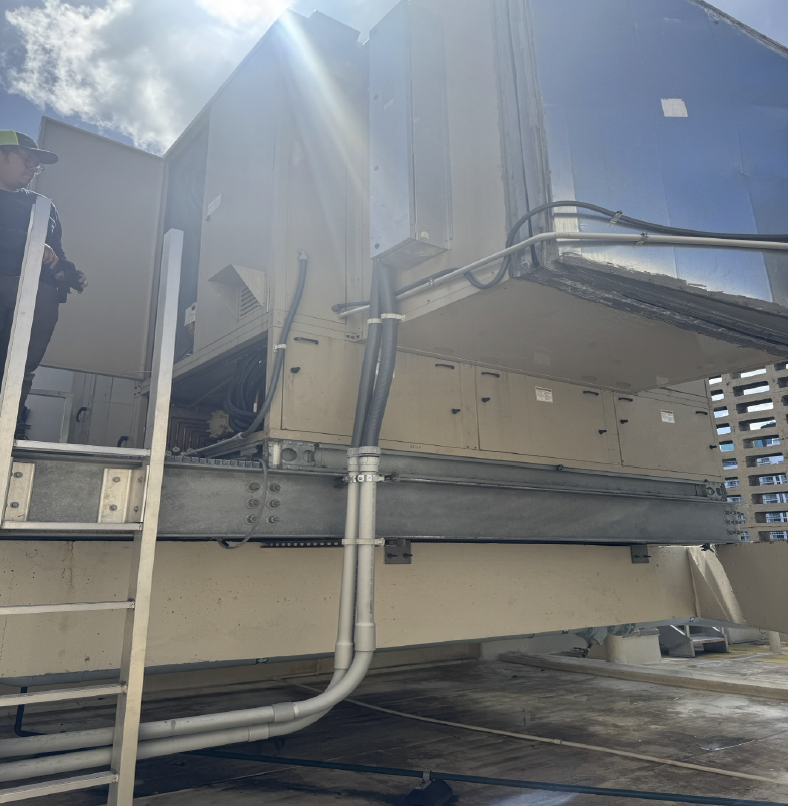
2. Hurricane Restraints Bypassed the Isolation System
The investigation identified rigid hurricane restraint straps connecting the equipment to the supporting structure. These rigid connections bypassed the intended vibration isolation path, allowing compressor vibration to travel directly into the building frame.
3. Spring Isolators Were Omitted
The rooftop support frame did not include spring vibration isolators beneath the equipment. Manufacturer guidance explicitly recommends spring isolation for roof-mounted applications to reduce transmission of dynamic forces into the structure.
4. Clearance Below Manufacturer Standards
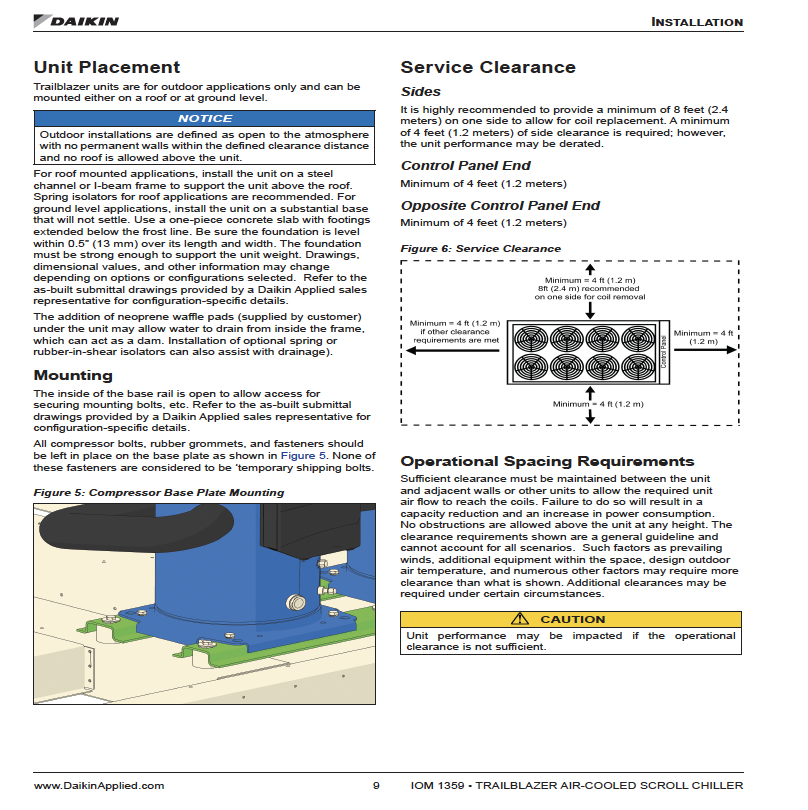
Field observations identified only approximately 28 inches of clearance between portions of the chiller and an adjacent wall. The manufacturer recommends significantly greater operational clearances to ensure unrestricted airflow, prevent air recirculation, and maintain optimal sound/energy performance.
5. Additional Installation Deficiencies
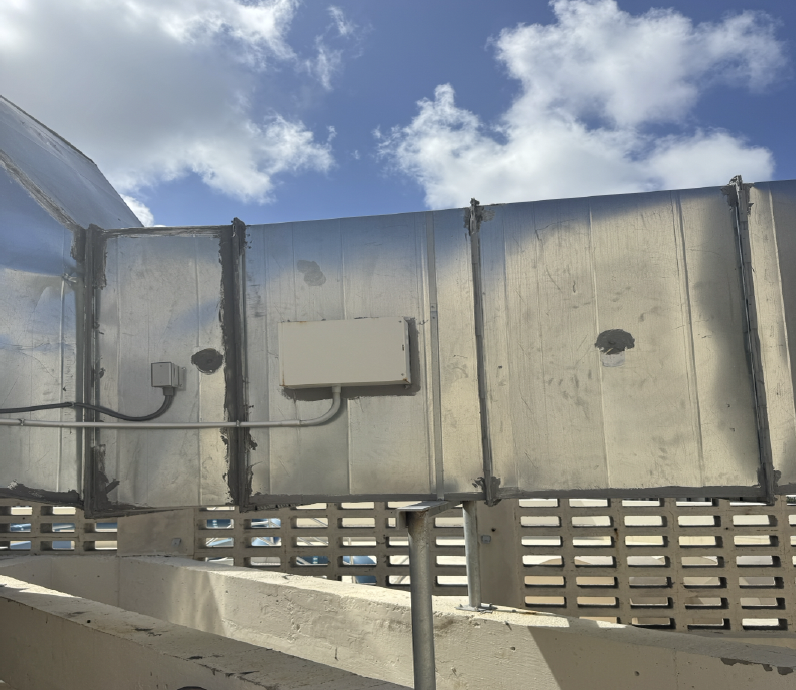
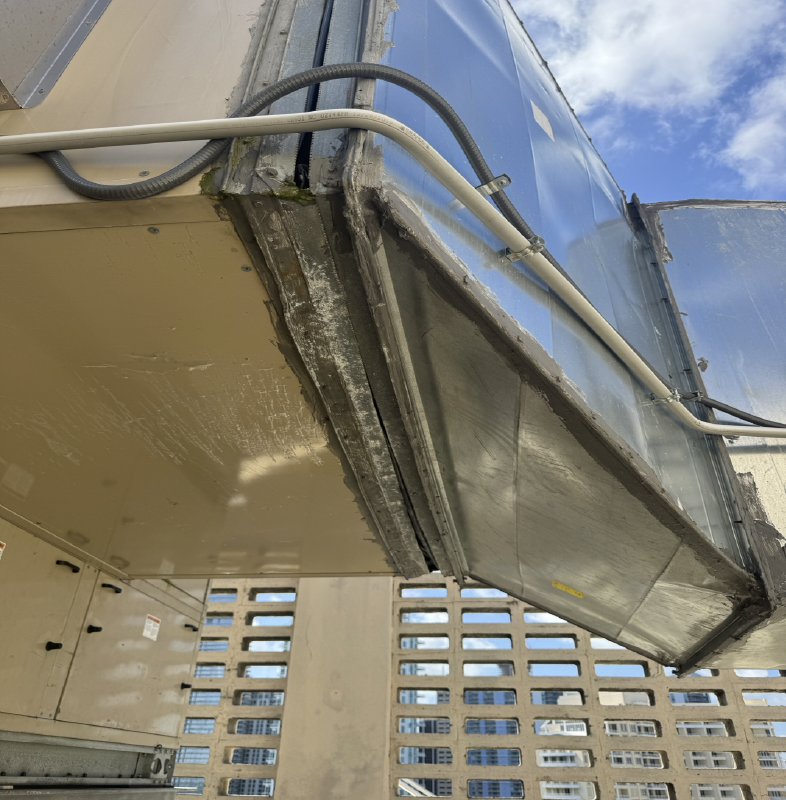
The investigation documented misaligned duct transition flanges, lack of spring isolation within portions of the duct support system, and metallic startup noise during compressor staging requiring retro-commissioning evaluation.
Measured Field Results
Vibration measurements inside the occupied penthouse confirmed that vibration generated by the rooftop equipment exceeded residential comfort guidance referenced in ANSI/ASA S2.71, proving the transmission into living spaces:
Engineering Conclusions
The investigation concluded that the vibration problem resulted primarily from structural transmission rather than airborne noise alone.
Rather than recommending isolated, piecemeal repairs, RAS Engineering recommended a comprehensive retro-commissioning process to identify root causes and optimize overall HVAC system performance before implementing permanent corrective measures.
Recommended Solutions
- Install properly engineered spring vibration isolators.
- Redesign hurricane restraint details to preserve isolation while maintaining safety.
- Verify and adjust operational clearances per manufacturer specs.
- Perform comprehensive retro-commissioning of the chiller system.
- Inspect piping supports, mounting hardware, and duct transitions.
- Identify source of compressor startup noise.
Why This Project Matters
Mechanical vibration problems in occupied buildings often involve complex interactions among structural engineering, HVAC design, equipment installation, and dynamic system behavior. Simply replacing equipment or adding isolation pads rarely addresses the true source of vibration.
This project demonstrates the importance of a forensic engineering approach that combines field measurements, equipment diagnostics, structural evaluation, manufacturer requirements, and vibration analysis to identify the root causes of occupant discomfort.

RAS Engineering Expertise
Need Help Solving a Vibration Problem?
If your building is experiencing excessive vibration, noise, or occupant comfort complaints, contact RAS Engineering to identify root causes and develop practical, long-term engineering solutions.
Contact Our Engineers